1000+ Copyright Violations? I Caught Them — and Built a System That Prevented Lawsuits
When I became a Quality Auditor at StudySmarter, I expected to catch the occasional typo or formatting inconsistency.
Instead, I uncovered a legal time bomb.
Images had been added to educational content for over two years — with no licensing checks, no proper attributions, and no system in place to ensure compliance.
We’re talking about both fully copyrighted images that were used and Creative Commons–licensed images that were used without attribution — a legal risk either way.
Some were minor missteps.
Others?
Included images from organisations like NASA, licensed strictly for U.S. use (IF they had a U.S. license use to begin with!), now published in UK-facing materials.
I’m not exaggerating when I say:
This could’ve cost the company millions.
The Risk: Real, Widespread, and Unchecked
I flagged the issue immediately. Legal was brought in. And once the scale became clear, I was asked to take the lead on building a proper compliance process from scratch.
This wasn’t just a few broken links or missing captions.
This was 1000+ unlicensed or incorrectly used images, spread across years of published content, all live, and publicly accessible.
There was no time to waste and no existing playbook. So I made one.
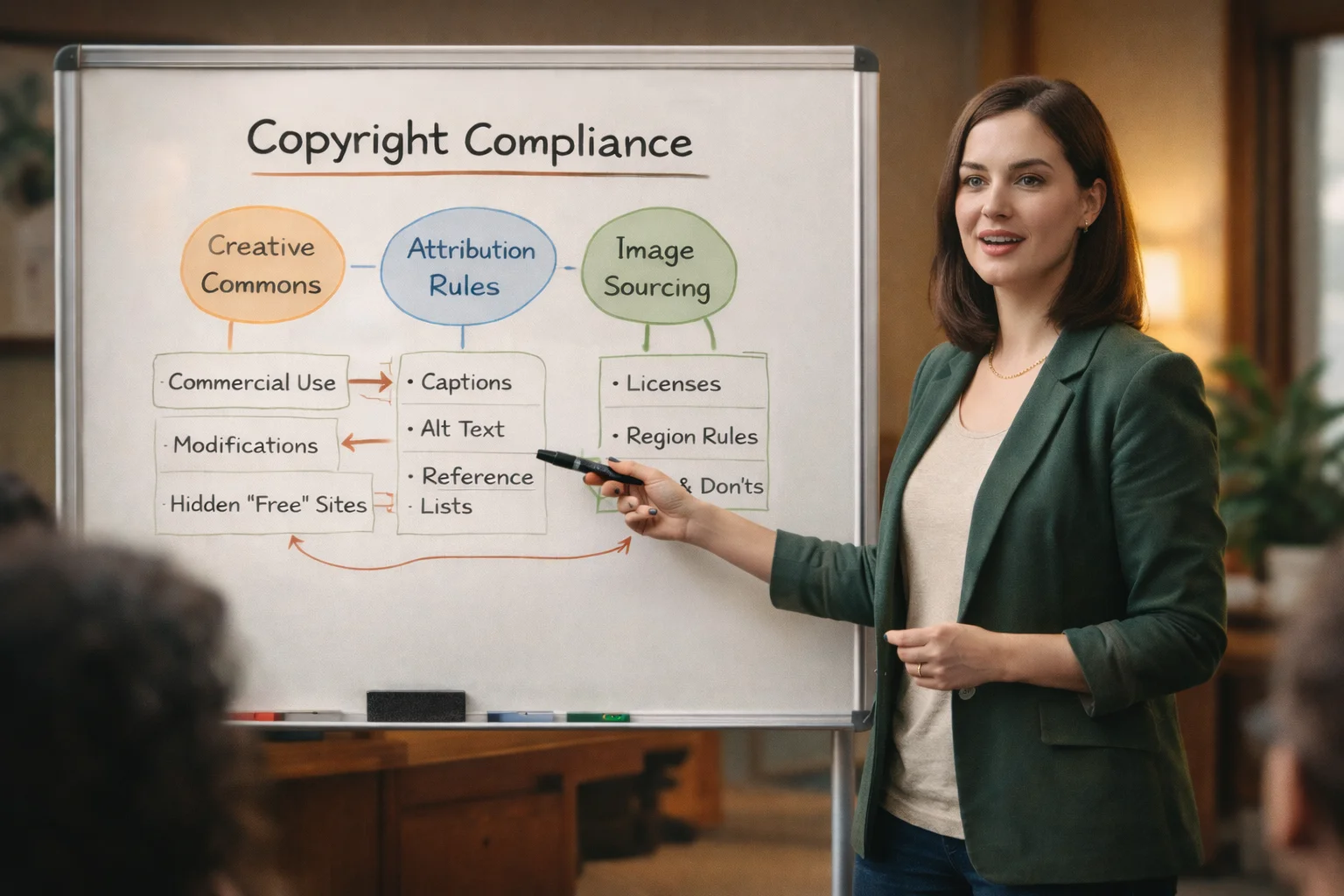
The Solution: A Practical, Scalable Copyright Compliance Framework
I created a system that was both legally sound and actually usable by writers, editors, and designers — even without legal backgrounds.
Here’s what the framework included:
All documented in plain English, with real examples and step-by-step screenshots wherever possible, so teams could actually follow along and apply it with confidence.
The Rollout: Training Everyone — Fast
To make it stick, I delivered the system in three ways:
I became the go-to person for anything image-related. My Slack saw daily messages with questions, from general licensing confusion to “can I use this image?” checks.
I didn’t just write the policy, I helped the team live it, case by case.This wasn’t just “read the doc and hope for the best.” This was a culture change, and it worked.
The Result: Crisis Averted, Compliance Achieved
Final Word?
No one asked me to fix this.
I found the risk, created the solution, and built the guardrails that protected the company.
That’s the difference between doing tasks and building systems that protect and scale.